When to prune roses in the UK: a month-by-month guide for every type
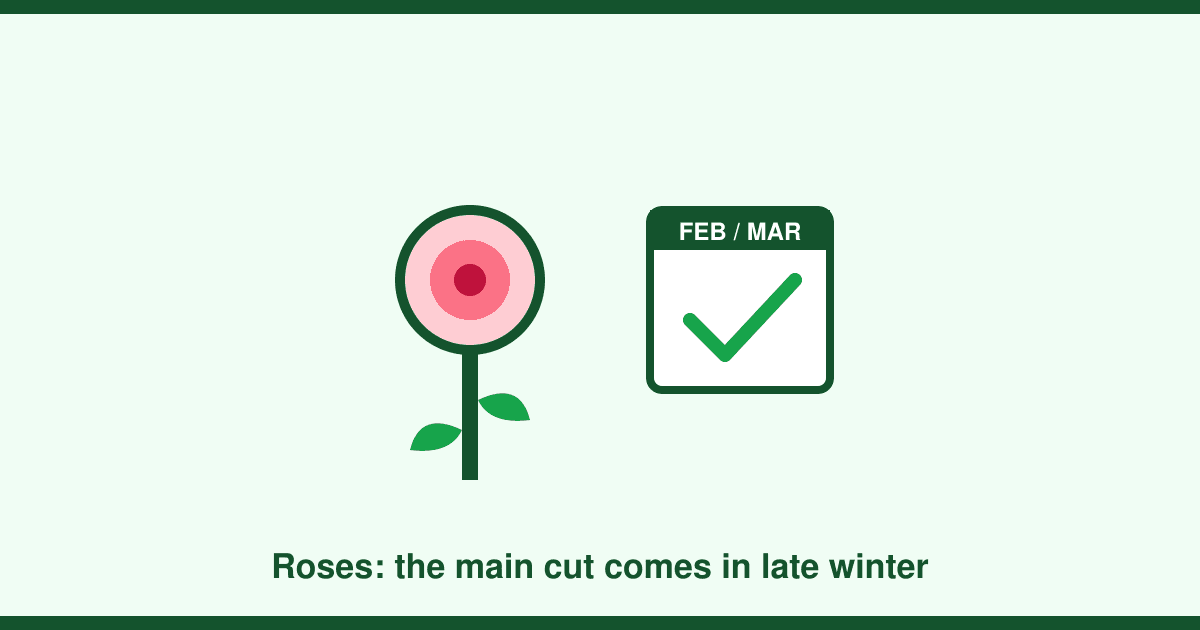
Rose pruning has a reputation for being complicated, with different rules for hybrid teas, floribundas, climbers, ramblers and shrub roses. The reality is simpler than the books suggest. The main cut for almost every rose in the UK happens once, in late winter, when the plant is still dormant but the buds are starting to swell. The variations between types mostly come down to how hard you cut, not when.
In short: Prune bush roses (hybrid teas and floribundas), shrub roses and climbers between mid-February and mid-March in most of the UK, a little later in Scotland and cold inland areas. Prune ramblers after they flower in late summer. Deadhead repeat-flowering roses through summer, and shorten tall bushes by about a third in November to stop winter winds rocking the roots. Never prune in a frost.
The pruning calendar
| Month | Job | Which roses |
|---|---|---|
| Late February to mid-March | Main prune: remove dead, diseased and crossing stems, shape the plant, cut to outward-facing buds | Hybrid teas, floribundas, shrub roses, patio roses, climbers |
| Late March (north and Scotland) | Same main prune, delayed to avoid hard frosts | All of the above |
| June to September | Deadhead spent flowers to encourage repeat blooming | Repeat-flowering types |
| August to September | Prune ramblers after their single flush; remove a third of the oldest stems and tie in new growth | Ramblers |
| November | Shorten tall bush and shrub roses by a third to prevent wind-rock; tidy fallen leaves | Hybrid teas, floribundas, tall shrub roses |
| Any month | Remove suckers from the rootstock as soon as you see them | Grafted roses |
Why late winter, not autumn
Roses pruned hard in autumn in the UK tend to produce soft new growth during mild spells that is then killed by frost, and open cuts over winter invite dieback. Waiting until February or March means the plant is ready to grow away immediately, the cut heals fast, and you can see which stems have died over winter before deciding where to cut. The traditional guide is to prune when the forsythia is in flower, which falls in late February in the south and mid-March further north.
Weather matters more than the calendar. If the forecast shows hard frost, wait a week. Cuts made during freezing conditions are more prone to dieback.
How to make the cut
Use sharp bypass secateurs, cleaned between plants if you have had blackspot or canker. Cut about 5 mm above an outward-facing bud, sloping away from the bud so that water runs off. Remove anything dead, diseased or damaged first, then any stems crossing through the middle of the plant, then shape what is left. Aim for an open centre that lets air circulate; this is the single most effective thing you can do against blackspot and mildew.
How hard to cut, by type
Hybrid teas, the classic large single blooms on long stems, are pruned hardest: cut the remaining strong stems back to 10 to 15 cm from the ground, leaving four to six buds on each. Floribundas, with clusters of flowers, are cut less hard, to around 25 to 30 cm, keeping more stems. Patio and miniature roses need only a light trim and the removal of dead wood.
Shrub roses, including the English roses and old garden roses, flower on a framework of older wood and should not be cut hard. Remove dead and weak growth, take out one or two of the oldest stems at the base on mature plants, and shorten the rest by no more than a third.
Climbers have a permanent framework of main stems trained as close to horizontal as possible, which encourages flowering shoots all along their length. In late winter, prune the side shoots that flowered last year back to two or three buds, remove any dead or weak growth, and tie in new main stems. Only cut a main stem out entirely if it is old and unproductive.
Ramblers are different: they flower once, in early summer, on the previous year's growth, and are pruned after flowering in late summer. Remove up to a third of the oldest flowered stems at the base and tie in the new long shoots, which will carry next year's flowers. Pruning a rambler in late winter removes most of its flowers.
Deadheading and summer care
On repeat-flowering roses, remove each spent flower by cutting back to the first full leaf (one with five leaflets) below it, which encourages a new flowering shoot. Stop deadheading in early autumn on roses grown for hips, such as Rosa rugosa and many species roses, so the hips can develop.
Suckers are shoots that grow from the rootstock below the graft union, usually with a different leaf and more thorns. Trace them back to where they emerge and pull them off rather than cutting, which only encourages regrowth.
Pruning as part of a garden routine
In a well-run garden the rose prune, the first lawn cut and the spring feed often fall into the same fortnight, which is why late March visits from professional gardeners are the busiest of the year. If you book a gardener for a one-off pruning session, expect it to be charged by the hour; our guide to what gardeners charge covers typical rates. A large rose garden with many climbers is a half-day job for an experienced gardener, and a good one will leave the plants looking sparse, which is exactly right. Our seasonal maintenance calendar sets out where rose work sits in the rest of the year.
Sources: Royal Horticultural Society, pruning guidance for bush, shrub, climbing and rambling roses; RHS advice on rose blackspot, mildew and deadheading; Met Office average last frost dates by region. Timings here are for typical lowland gardens; in cold, exposed or northern sites delay the main prune by two to three weeks.
Frequently asked questions
Late February to mid-March for most roses, when the buds are swelling but before growth starts; roughly when forsythia flowers. In Scotland and cold inland areas, late March is safer. Ramblers are the exception and are pruned after flowering in late summer.
Only lightly. In November, shorten tall bush and shrub roses by about a third to stop winter winds rocking the plant and loosening its roots, and clear fallen leaves to reduce blackspot. Leave the main structural prune until late winter, because hard autumn cuts encourage soft growth that frost will kill.
Hard. Remove dead, diseased and crossing stems, then cut the remaining strong stems back to 10 to 15 cm from the ground, leaving four to six buds on each, cutting just above an outward-facing bud. Floribundas are cut to about 25 to 30 cm and shrub roses only by a third.
Climbers are pruned in late winter: side shoots that flowered last year are cut back to two or three buds and the main stems are tied in horizontally. Ramblers flower once on last year’s growth and are pruned straight after flowering in late summer by removing a third of the oldest stems. Pruning a rambler in winter removes its flowers.
No. Cuts made in freezing conditions heal slowly and are prone to dieback. If hard frost is forecast, wait a week. Pruning in dry, mild weather in late winter gives the cleanest result.