How to lay turf: preparation, the best months in the UK and aftercare
A turfed lawn looks finished the day it is laid, which is its great appeal over seed. It is also the reason so many new lawns fail: the green surface hides thin, lumpy or compacted ground beneath, and the roll that looked perfect in May is a patchwork of dead strips by August. Almost every problem with laid turf traces back to one of three things: poor preparation, laying at the wrong time of year, or not enough water in the first fortnight.
In short: The best time to lay turf in the UK is early autumn (September to mid-October) or spring (March to April), when the soil is warm and moist and rain does the watering for you. Prepare the ground thoroughly, firm and level it, and lay the turf within 24 hours of delivery in a staggered brick pattern, working from boards. Water it the same day and keep it moist until the roots have knitted into the soil, usually two to three weeks. Keep off it for at least a month.
When to lay turf
Turf will root whenever the soil is above roughly 5°C and moist, which in most of the UK is any time from March to November. Within that window, two periods are clearly better than the rest.
| Period | Verdict | Why |
|---|---|---|
| September to mid-October | Best | Soil still warm, regular rain, roots establish before winter, lawn ready for use by spring |
| March to April | Good | Ground warming up, spring rain, lawn usable by summer; watch for late dry spells |
| May to August | Possible but risky | Hot, dry weather means daily watering, sometimes twice a day; hosepipe bans can kill a new lawn |
| November to February | Avoid unless mild | Cold, wet or frozen soil; turf sits without rooting and can rot or be lifted by frost |
Turf suppliers cut and deliver all year, so availability is rarely the constraint. The weather forecast for the two weeks after laying matters more than the date.
Preparing the ground
Preparation is most of the work and most of the cost of a laid lawn. Skimping on it is the mistake that cannot be fixed afterwards.
- Clear the area. Remove old turf, weeds, stones and builders' rubble. Perennial weeds such as couch grass and bindweed should be dug out or treated with a systemic weedkiller several weeks beforehand; they will grow through new turf.
- Dig or rotavate to a depth of around 15 cm, breaking up compaction. On heavy clay, work in sharp sand or grit; on thin or very sandy soil, add organic matter or bring in topsoil to give at least 10 to 15 cm of decent soil.
- Level and firm. Rake roughly level, then tread the whole area with your weight on your heels, in two directions, to remove soft spots. Rake again, tread again. The surface should be firm enough to walk on without leaving deep footprints, but not compacted.
- Final grade. Rake to a fine, level tilth, removing stones larger than a walnut. Set the finished level about 2 cm below paths and patios so the mower can run over the edge.
- Feed. Rake in a pre-turfing fertiliser a day or two before laying.
Laying day
Turf is a living plant cut from a field, and it starts to deteriorate the moment it is rolled. Arrange delivery for the day you will lay it, and if the weather is warm, unroll any rolls you cannot lay within a few hours so they do not heat up and yellow in the stack.
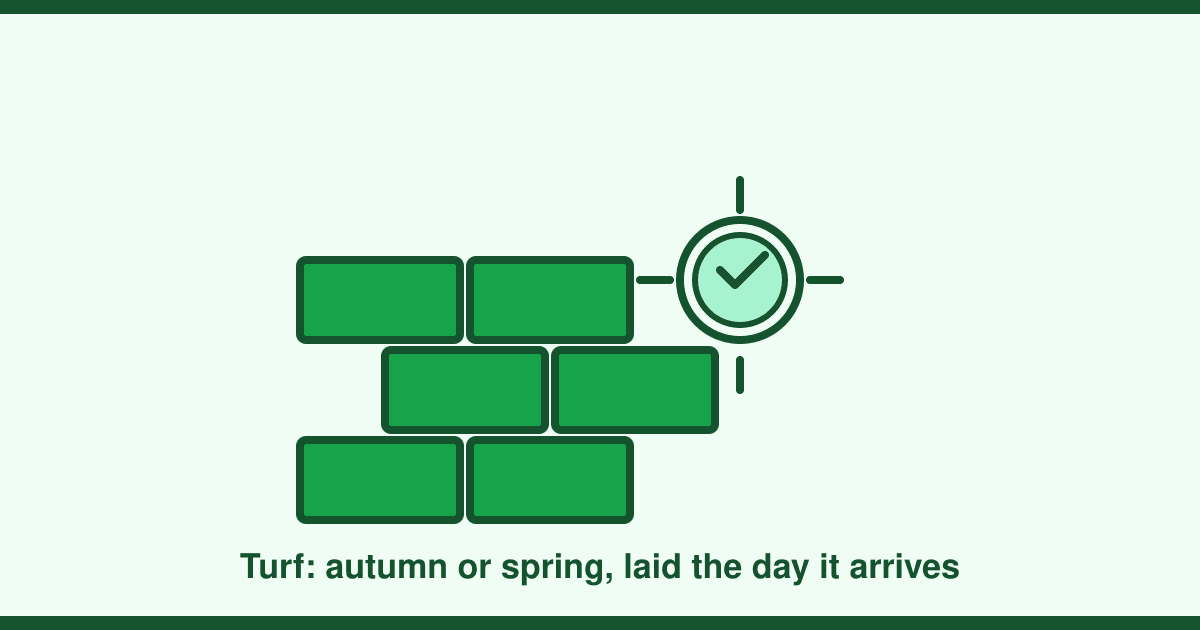
Start along a straight edge, usually a path or the longest side. Lay the first row, then stagger the joints in the next row like brickwork. Butt the edges tightly together without stretching or overlapping, and push the pieces together rather than pulling them. Work from planks laid on the turf you have already placed, never directly on the prepared soil. Use full pieces at the edges and put any small offcuts in the middle, where they are less likely to dry out. Cut shapes with an old kitchen knife or half-moon edger. Once laid, tamp gently with the back of a rake or a light roller to ensure contact with the soil, and brush a little sandy topsoil into any gaps.
Watering and the first six weeks
Water thoroughly within half an hour of finishing, enough to soak through the turf into the soil beneath. Lift a corner to check. For the next two to three weeks, keep the turf and the top few centimetres of soil moist: in autumn that may mean watering only on dry days, in late spring every evening, in summer morning and evening. Turf that is allowed to dry out shrinks, the joints open and the edges brown, and it rarely recovers evenly.
After about two weeks, try lifting a corner. If it resists, the roots have knitted and you can reduce watering. Give the lawn its first mow once the grass reaches about 5 to 6 cm, with the mower on its highest setting and sharp blades, and never remove more than a third of the leaf. Keep foot traffic off for at least four weeks, and avoid heavy use for the first season. An autumn feed, if you laid in September, helps the roots over winter.
Turf or seed?
Seed costs a fraction of turf and gives a wider choice of grass mixtures, but takes six to ten weeks to become a usable lawn and needs the same preparation. Turf makes sense where you want an immediate result, where children or dogs will not stay off a seeded area, or where the site is sloping and seed would wash. Supply-only turf for a typical garden costs a few pounds per square metre; the preparation and laying, if you hire a landscaper, is where most of the cost sits. Our article on garden landscaping costs sets out typical totals for new lawns, and you can compare landscapers in your city in our listings.
Sources: Royal Horticultural Society, guidance on laying turf and on lawn establishment; Turfgrass Growers Association guidance on handling and laying cultivated turf; Met Office soil temperature and rainfall averages for the UK. Timings are for typical lowland gardens; in upland and northern areas the autumn window closes earlier.
Frequently asked questions
September to mid-October is the best window: the soil is still warm, rain is regular and the roots establish before winter, giving a usable lawn by spring. March to April is the next best. Summer laying is possible but needs daily watering, and laying on cold, wet or frozen ground in winter is best avoided.
Within 24 hours, and sooner in warm weather. Rolled turf heats up and yellows in the stack. If you cannot lay it all the same day, unroll the remaining pieces in a shady spot and water them lightly.
Soak it within half an hour of laying, then keep the turf and the soil beneath moist for two to three weeks: every evening in dry spring weather, morning and evening in summer, and only on dry days in autumn. Lift a corner after two weeks; once the roots resist, reduce watering gradually.
Mow for the first time when the grass reaches about 5 to 6 cm, usually two to three weeks after laying, with the mower on its highest setting. Keep off the lawn for at least four weeks and avoid heavy use for the first season.
The usual causes are drying out in the first fortnight, poor contact with the soil beneath from uneven or soft ground, or laying on compacted ground that the roots could not penetrate. Small offcuts at the edges also dry out first. Thorough preparation and consistent watering prevent nearly all of it.