The Tools a Professional Gardener Actually Uses — and the Ten Worth Owning Yourself
There's a reliable way to tell a gardening catalogue from a gardener: the catalogue has forty tools, the gardener's van has about ten — most of them older than the van. Professionals converge on a short kit because gardening rewards sharp, comfortable, repairable tools used constantly, not gadget drawers. Here's that kit, ranked by how much work each tool actually does.
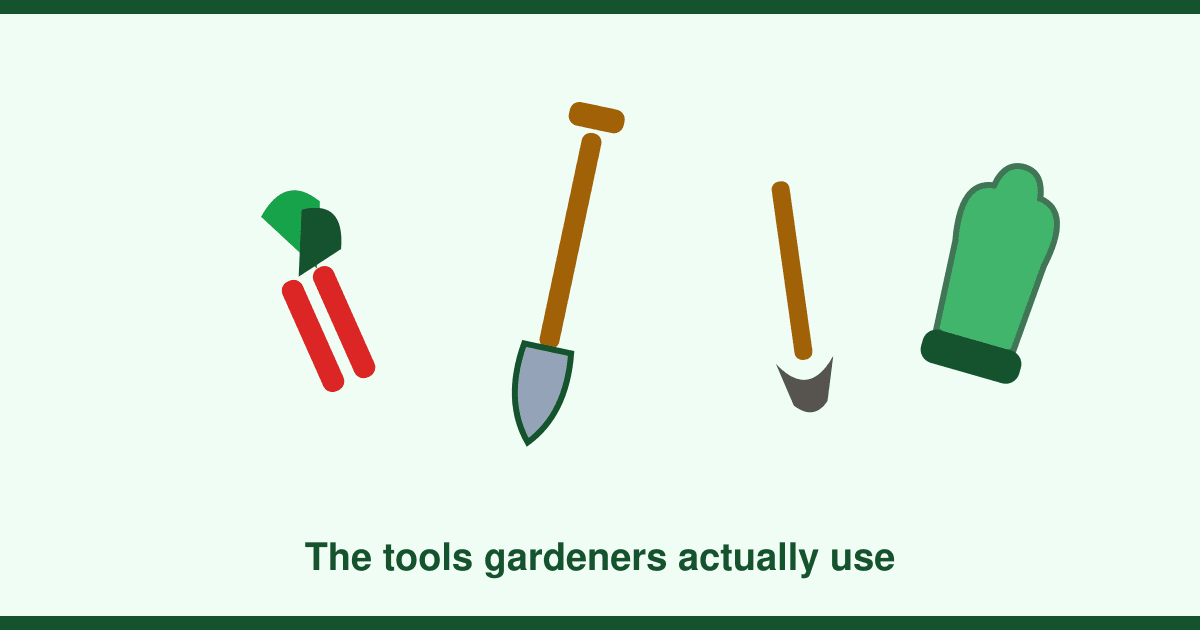
In short: Five tools do perhaps 80% of real garden work: secateurs, a digging spade, a border fork, a hoe and a decent rake — with gloves and a sharpening tool as the supporting cast. The professional's rule is buy once, cry once: one quality tool that lasts decades beats three cheap replacements — and comfort in the hand matters more than any brand name.
The core five (80% of all garden work)
- Bypass secateurs: The most-used tool in any professional's pocket — pruning, deadheading, harvesting, cutting twine. Bypass (scissor-action) for living stems; keep them sharp and clean, because crushing cuts invite disease. If one tool deserves the quality upgrade, it's this one.
- Digging spade: Planting, edging, dividing, moving soil. Fit matters more than features — the handle length should suit your height, and a forged one-piece head outlives welded ones by decades.
- Border fork: For every soil that isn't sieved loam — compacted ground, clay, root-riddled beds. The fork forgives what breaks spades, and doubles for turning compost.
- Dutch or draw hoe: Ten relaxed minutes of hoeing weekly beats an hour of kneeling weekly — the professional's weed control is little-and-often severing of seedlings, not heroic extraction. The single most underrated tool on this list.
- Rake (one soil, one spring-tine): A soil rake for seedbeds and levelling; a spring-tine for leaves and lawn — autumn without one is twice the job.
The supporting cast
- Gloves — two pairs: thin and grippy for fiddly work, thorn-proof gauntlets for roses and brambles. The £1 pair that wears through in a week is the false economy of the genre.
- Hand trowel and hand fork: container planting, bulbs, close weeding — buy metal-shanked ones; the press-fit handles are landfill on a delay.
- Sharpening stone or diamond file: the tool that upgrades every other tool — five minutes monthly keeps secateurs, hoe and spade edges working like new. Professionals sharpen constantly; it's half their apparent effortlessness.
- Loppers and a pruning saw: for everything secateurs shouldn't be forced through (finger-thick and up) — forcing secateurs ruins them and the plant. Genuine tree work is tree surgeon territory with its own kit and insurance.
- Watering can with a rose + hose: establishment watering decides whether new planting lives; the fine rose is what keeps seeds where you sowed them.
- Wheelbarrow or trug: moving compost, prunings and the eternal weed pile — the barrow for gardens, the flexible trug for everything smaller.
What you can skip (honestly)
- Powered gadgets for small gardens: leaf blowers, mini-tillers and battery weeders earn their keep on scale; in a courtyard they're storage problems with chargers.
- The forty-piece tool set: you'll use six pieces; the rest is packaging. Assemble the short list above instead, piece by piece, secateurs first.
- Anything a monthly professional brings anyway: if a regular gardener already visits, mowers, hedge trimmers and heavy kit arrive in their van — your money is better spent on the visits than duplicating the van. The DIY-versus-gardener trade-off is a maths problem worth doing before any big purchase.
Care: the habit that makes cheap kit expensive-looking
End-of-session care takes three minutes: knock off soil, wipe metal, hang tools dry — and once a month, sharpen edges and oil moving parts. A £25 spade maintained this way outlasts an abandoned £60 one; rust, not use, is what kills garden tools. (It's also why seasonal maintenance rhythm matters — winter is when tools get cleaned, sharpened and stored, not forgotten in a bed.)
The gift-list footnote: If you're reading this to buy for a gardener — quality secateurs, a diamond sharpener, proper gauntlets or a hand-forged trowel are the safe bets; they're consumables-adjacent, always welcome, and no serious gardener owns too many. Skip novelty tools; they know.
The bottom line
Ten tools, bought well and kept sharp, cover a lifetime of gardens: the core five for the work, gloves and a sharpener to make it pleasant, loppers, watering kit and a barrow for the rest. Build the kit slowly, spend where your hands spend time — and for the jobs beyond the kit, find vetted local gardeners here.
Frequently asked questions
Five tools do most real garden work: bypass secateurs, a digging spade, a border fork, a hoe and a rake — supported by good gloves, a hand trowel and a sharpening stone. Professionals use a deliberately short kit, kept sharp, rather than large tool sets.
For the tools your hands live on — secateurs and spade especially — yes: forged, repairable tools last decades and stay comfortable, following the buy-once-cry-once rule. For occasional-use items, mid-range serves fine; comfort and fit matter more than brand names.
Three minutes after each session: knock off soil, wipe metal dry, hang them up. Monthly, sharpen edges with a stone or diamond file and oil moving parts. Rust rather than use is what destroys tools — a cheap spade maintained this way outlasts a neglected premium one.
Quality bypass secateurs, a diamond sharpener, thorn-proof gauntlets or a forged hand trowel — near-consumable essentials that every gardener uses constantly and happily owns in multiples. Novelty gadgets, by contrast, tend to stay in the shed.