How to remove a tree stump: grinding, digging, chemicals and what each costs in the UK
Felling a tree is the quick part. The stump that is left, with a root plate spreading as wide as the canopy was, is the part that lingers, and most quotes for tree removal either exclude it or price it separately. What to do about it depends on the size of the stump, what you want to do with the ground afterwards, how much you are willing to spend and how patient you are.
In short: For most garden stumps, professional stump grinding is the fastest and cleanest option, taking an hour or two and leaving chippings you can use as mulch. Small stumps can be dug out by hand. Chemical stump killers stop regrowth and speed decay but take months to years. Leaving a stump to rot naturally takes five to ten years and may produce suckers. Check for a Tree Preservation Order and for buried services before any grinding or digging.
The options compared
| Method | Best for | Time | Typical cost (UK) |
|---|---|---|---|
| Professional stump grinding | Most garden stumps, where you want to replant or lay lawn | 1 to 3 hours on site | Roughly £60 to £150 for a small stump, £150 to £400 for a large one; less per stump when done with the felling |
| Hiring a stump grinder | Confident DIYers with several small stumps | Half a day plus collection | Around £80 to £150 a day for a pedestrian grinder, plus fuel and transport |
| Digging out by hand | Stumps under about 20 cm diameter, shallow-rooted species | Two to six hours of hard work | Tools only |
| Chemical stump killer | Preventing regrowth, speeding decay where grinding is not possible | Months to several years | £10 to £30 for the product |
| Leave to rot | Woodland edges, wildlife gardens, where the stump is out of the way | 5 to 10 years, longer for oak and yew | Nothing |
Prices vary with access, stump size and species; hardwoods such as oak and beech take longer to grind than softwoods or conifers. Always get the stump included in the original felling quote if you can; a tree surgeon with a grinder already on site charges far less than one making a separate visit. Our guide to tree surgery costs explains how the rest of the job is priced.
Stump grinding
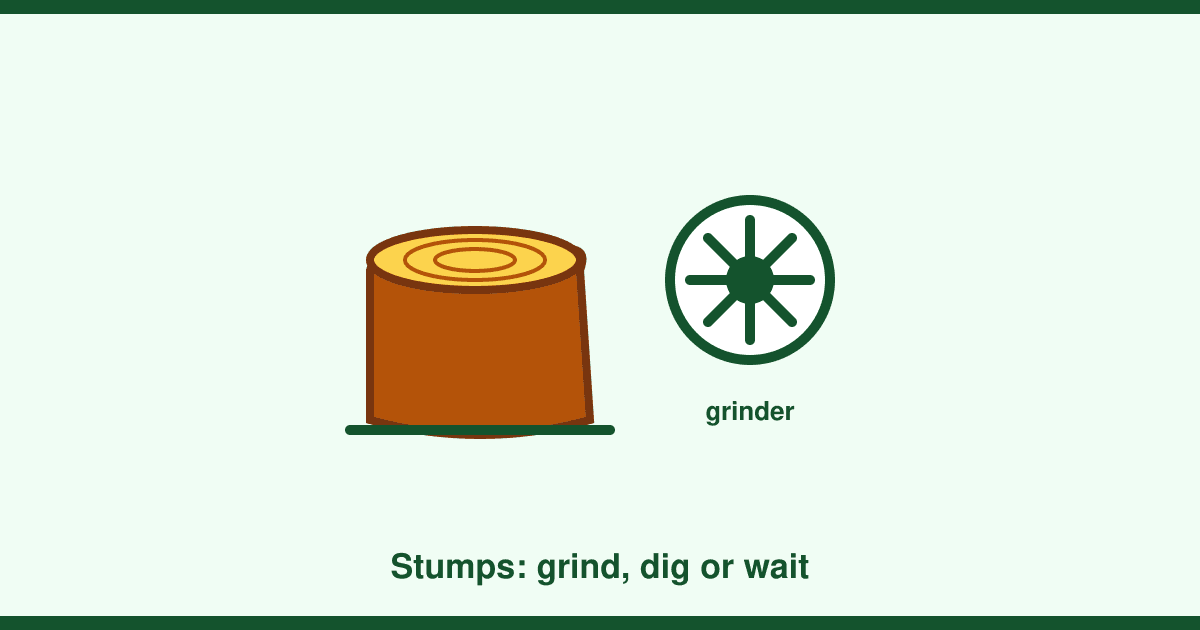
A stump grinder is a machine with a toothed wheel that chews the stump into chippings, working from the top down to about 20 to 30 cm below ground level. That depth removes the stump itself and the top of the main roots, which is enough to lay turf, plant shrubs or build a shed over the spot. Lateral roots further out are left to rot. The hole fills with a mix of chippings and soil; for planting, remove most of the chippings and bring in topsoil, since decomposing wood draws nitrogen from the soil for a year or two.
Access is the usual constraint. Pedestrian grinders fit through a standard garden gate; larger tracked machines need wider access. A good operator will ask about underground services, as grinding through a water pipe or cable is both dangerous and expensive, and will protect windows and cars from flying chips. The job is noisy and should not be attempted without eye and ear protection and steel toe-capped boots.
Digging a stump out
For a young tree or a shrub with a trunk under about 20 cm across, digging is realistic. Dig a trench around the stump about 30 to 50 cm out, exposing the main roots. Cut each root with a pruning saw, loppers or a mattock as you find it. Once the laterals are cut, rock the stump to break the taproot, if there is one, and lever it out. Keep soil out of your saw's path, since grit blunts a blade in minutes. A stump that has been dead for a year is noticeably easier to dig than a fresh one. Anything larger than this quickly becomes a job for a mini-digger or a grinder.
Chemical stump killers
Products sold for stump treatment in the UK are based on glyphosate or triclopyr and work by being drawn into the root system from a fresh cut. Cut the stump as low as possible, drill holes into the outer ring of wood where the living tissue is, and apply the product immediately as the label directs. Treated stumps do not regrow, which is the main benefit for species that sucker, but they do not disappear; decay is somewhat faster than untreated wood, and the stump still has to be dug or ground eventually if you want the ground clear. Epsom salts and rock salt are widely recommended online and have little effect beyond drying the surface wood.
Never burn a stump in a garden. Roots can smoulder underground for days, smoke is a statutory nuisance and the heat sterilises the soil around it.
Leaving it
Left alone, a stump rots at a rate that depends on species and conditions: birch and willow break down in a few years, oak, yew and sweet chestnut take decades. In the meantime, it is excellent habitat for beetles and fungi, and a stump drilled with holes or planted with ivy can be made a feature. The risks are honey fungus, which colonises dead stumps and can spread to living plants nearby, and suckering: willow, poplar, cherry, plum, lilac, sumach and robinia all send up shoots from the roots for years after felling. Mow or cut suckers off as they appear and they eventually give up; applying stump killer to the fresh-cut stump at the time of felling largely prevents them.
Before you start
Two checks apply to any method. If the tree was protected by a Tree Preservation Order, the stump is still protected and removing it needs the council's consent, as set out in our TPO guide. And before grinding or digging, locate buried services: water, gas, electricity, drains and telecoms, which in older gardens are rarely where the plans say. Tree surgeons use a cable avoidance tool for exactly this reason. You can compare tree surgeons who offer stump grinding in our listings.
Sources: Royal Horticultural Society, guidance on tree stump removal and on honey fungus; Arboricultural Association guidance on stump grinding and site safety; Health and Safety Executive guidance on avoiding danger from underground services (HSG47); UK product labels for glyphosate and triclopyr stump treatments. Prices are indicative national ranges from tree surgery quotes and tool hire rates and vary by region and access.
Frequently asked questions
Roughly £60 to £150 for a small stump and £150 to £400 for a large one as a separate visit, with hardwoods and difficult access at the top of the range. It is much cheaper per stump when included in the original felling quote, because the grinder is already on site.
Usually 20 to 30 cm below ground level, which removes the stump and the top of the main roots. That is enough to lay turf, plant shrubs or build over the spot. Lateral roots further out are left in the ground to rot.
Not reliably. Epsom salts and rock salt dry the surface wood but do little to the roots. Products based on glyphosate or triclopyr, applied to a fresh cut as the label directs, stop regrowth and speed decay, though the stump still has to be ground or dug out if you want the ground clear.
Birch and willow break down within a few years; most garden trees take five to ten; oak, yew and sweet chestnut can take decades. Dead stumps can host honey fungus and some species send up suckers for years, so leaving a stump is best where it is out of the way.
If the tree was covered by a Tree Preservation Order, the stump remains protected and removal needs council consent. Otherwise no permission is required, but check for buried water, gas, electricity, drains and telecoms before grinding or digging; tree surgeons use a cable avoidance tool for this.