When to prune apple trees in the UK, and why plums and cherries follow different rules
Fruit tree pruning is where many confident gardeners lose their nerve, and where the consequences of a wrong cut last longer than anywhere else in the garden. Prune an apple hard in the wrong year and you get a thicket of water shoots and no fruit; prune a plum in winter and you may lose the tree to silver leaf. The rules are not complicated, but they do depend on knowing what kind of tree you have and how it is grown.
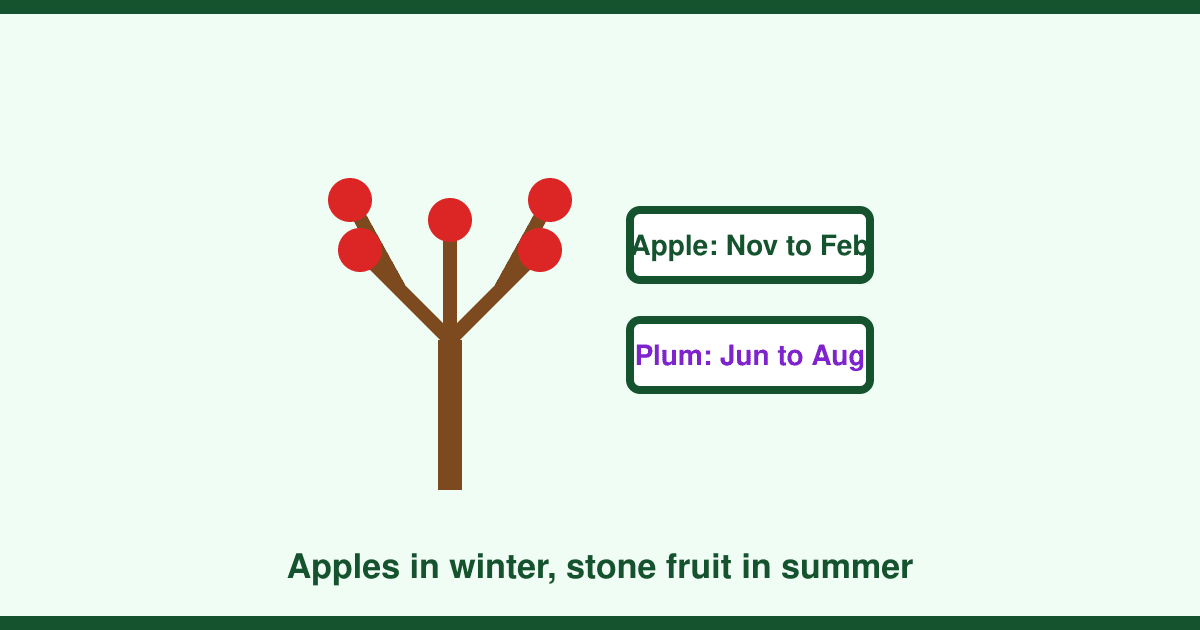
In short: Prune free-standing apple and pear trees between November and the end of February, on a frost-free day, removing dead, diseased, damaged and crossing wood and keeping the centre open. Prune trained apples and pears (cordons, espaliers, fans) in August. Never winter-prune plums, cherries, apricots, peaches or other stone fruit; prune them in summer, June to August, when silver leaf and bacterial canker spores are least active. Remove no more than about a fifth of the canopy in any one year.
The fruit tree pruning calendar
| Tree | When to prune | Main aim |
|---|---|---|
| Apple and pear, free-standing bush or standard | November to February, dormant, frost-free day | Open centre, remove dead and crossing wood, renew fruiting wood |
| Apple and pear, cordon, espalier, fan or stepover | August (summer pruning), light tidy in winter | Keep the trained shape, encourage fruit spurs |
| Plum, damson, gage, cherry | June to August only, after fruiting for cherries | Remove dead and crossing wood; prune lightly |
| Apricot, peach, nectarine | Spring as buds break or summer | Renew fruiting wood (fruit on last year's growth) |
| Young trees of any kind, first three winters | Winter for apples and pears; summer for stone fruit | Build a framework of three to five well-spaced main branches |
Winter pruning apples and pears
The dormant season is the time for structural work on free-standing apples and pears. With the leaves off you can see the shape, and the tree responds in spring with vigorous growth from where you cut. Work through the tree in this order:
- Dead, diseased and damaged wood comes out first, cutting back to healthy growth. Look for canker (sunken, cracked bark) and cut well below it.
- Crossing and rubbing branches: remove the weaker of the pair.
- Open the centre. The traditional goblet shape, with an open middle and four or five main branches, lets light and air into the tree, ripens fruit evenly and reduces scab and mildew. Remove inward-growing shoots and any branch heading into the middle.
- Shorten and thin. On young trees, cut back the leaders (main branch tips) by about a third to an outward-facing bud to encourage branching. On mature trees, thin congested spur systems so each spur has room, and remove a few of the oldest, least productive branches to let new wood come through.
Resist the urge to do everything in one winter. Removing more than around 20 per cent of the canopy triggers a flush of vertical water shoots the following summer, which shade the tree and carry no fruit. A neglected tree is brought back over three winters, not one.
Spur-bearing and tip-bearing varieties
Most apples, including Cox, Bramley, Egremont Russet and Gala, are spur-bearers: they fruit on short stubby spurs along branches two years old and older. These can be pruned conventionally, shortening side shoots to encourage spurs. A minority, including Bramley's Seedling in part, Worcester Pearmain and Discovery, are tip-bearers or partial tip-bearers, fruiting at the ends of last year's shoots. Shorten all their side shoots and you remove the crop. On a tip-bearer, leave unpruned any shoot shorter than about 25 cm and only cut back the longest growth.
Summer pruning trained trees
Cordons, espaliers and fans grown against walls or wires are pruned in August using the modified Lorette system: cut back this year's side shoots growing from the main stem to three leaves above the basal cluster, and shoots growing from existing spurs to one leaf. Summer pruning checks growth rather than stimulating it, which is exactly what a restricted form needs, and it exposes developing fruit to the sun. A light winter tidy removes anything that was missed.
Why stone fruit is pruned in summer
Plums, cherries and their relatives are vulnerable to silver leaf, a fungal disease whose spores are released in cool, damp weather from autumn to spring and enter through fresh wounds, and to bacterial canker, which behaves in a similar way. Pruning cuts made in summer, when the tree is in full leaf and the wounds heal quickly, carry far less risk. Prune plums and damsons in June or July, and sweet and acid cherries after fruiting in July or August. Keep it light: stone fruit does not need the annual structural pruning that apples do, and large cuts should be avoided altogether on mature trees.
Tools and technique
Use sharp bypass secateurs for small shoots, loppers up to about 3 cm and a pruning saw beyond that. Make cuts just above an outward-facing bud, sloping away from it, and when removing a whole branch, cut just outside the slight swelling (the branch collar) where it joins the trunk, without leaving a stub or cutting flush. Wound paints are no longer recommended for apples and pears; the tree seals the wound itself. Clean tools between trees if any show canker.
Large old trees, anything that needs a ladder beyond the first rungs, and trees overhanging neighbours or roads are work for a tree surgeon, who will also recognise disease you might miss. Check for a Tree Preservation Order before any substantial work; fruit trees grown for their fruit have an exemption for routine pruning but not for felling, as our guide to TPOs explains. For a few trees in a garden, most local gardeners will include winter fruit tree pruning in a regular visit.
Sources: Royal Horticultural Society, guidance on pruning apples and pears (winter and summer), pruning plums and cherries, and on silver leaf and bacterial canker; RHS lists of spur-bearing and tip-bearing apple varieties; Garden Organic guidance on restoring neglected fruit trees. Timings are for typical UK gardens; in the far north, finish winter pruning by mid-March at the latest.
Frequently asked questions
Between November and the end of February for a free-standing apple or pear, on a frost-free day while the tree is dormant. Trained apples and pears such as cordons and espaliers are pruned in August instead, with only a light tidy in winter.
No. Plums, damsons, gages and cherries are prone to silver leaf and bacterial canker, which infect fresh cuts in cool, damp weather from autumn to spring. Prune them lightly between June and August, when wounds heal fast. Prune cherries after they have fruited.
About a fifth of the canopy at most. Removing more triggers a mass of vertical water shoots the next summer that shade the tree and carry no fruit. Bring a neglected tree back gradually over three winters rather than in one.
Usually over-pruning or over-feeding, both of which push the tree into leafy growth; a tip-bearing variety whose shoot tips have been cut off; or a young tree not yet mature enough to crop. Reduce pruning, stop feeding with nitrogen, and leave shoots under 25 cm unpruned on tip-bearers.
Not on apples and pears; wound paints are no longer recommended and the tree seals cuts itself if they are made cleanly just outside the branch collar. On stone fruit, pruning in summer when wounds heal quickly is the main protection against disease.