How to stop cats fouling in your garden: what works, what does not and what the law says
Few garden problems generate as many confident remedies as cats. Orange peel, coffee grounds, lion dung, pepper, ultrasonic boxes, plastic bottles of water, special plants: everyone has a tip, and most of them work for a week before the cat shrugs and comes back. Cats are creatures of habit and territory, and once a bed has been adopted as a toilet, changing that habit takes a combination of methods applied consistently rather than a single magic deterrent.
In short: Cats choose loose, dry, bare soil, so the most reliable fix is to make soil unavailable: cover bare beds with mulch, planting, chicken wire, pebbles or twigs. Motion-activated water sprinklers are the best-evidenced active deterrent, with ultrasonic devices some way behind. Scent deterrents fade quickly and need constant renewal. Mothballs and any substance that could harm the cat are illegal to use outdoors. Cats have a legal right to roam, so talking to the owner is the only route if you want them kept in.
Why your garden
Cats dig and bury in substrates that are easy to scratch: freshly cultivated soil, dry compost, bark chips on their own, sand pits, gravel of a fine grade. A newly planted border in April is as attractive to a cat as a litter tray, and a vegetable bed raked to a fine tilth is irresistible. They also return to places that already smell of cat, which is why one visit becomes a routine. Removing the attraction is more effective than punishing the visit.
What works
| Method | Evidence | Notes |
|---|---|---|
| Covering bare soil (mulch, dense planting, pebbles, chicken wire laid flat, pea sticks, twigs) | Strong, from behaviour: cats avoid substrates they cannot dig | Chicken wire under a thin layer of mulch stops digging and plants grow through it; works in vegetable beds while seedlings establish |
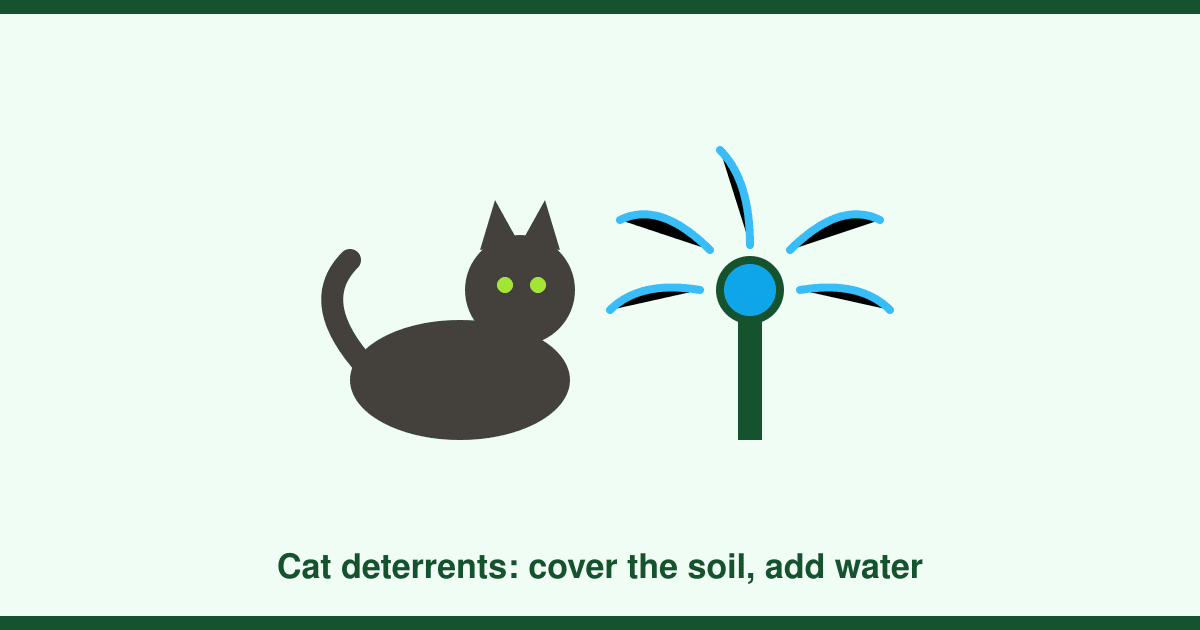
| Motion-activated water sprinkler | Good; widely recommended by the RSPB and in cat-deterrent trials | Harmless, startling, covers a wide arc; needs a hose connection and turning off when you garden |
| Ultrasonic deterrent | Moderate; an RSPB-commissioned study found a significant reduction in visits over time, not total exclusion | Position at cat height facing the route in; effectiveness varies between cats and some ignore it |
| Removing scent marks and faeces promptly, washing with biological detergent | Reasonable; reduces the cue to return | Avoid bleach and ammonia, which smell like urine to a cat |
| Dense, prickly or ground-covering planting | Good once established | Low shrubs, groundcover roses, berberis under windows; leaves no bare soil to dig |
| Commercial scent repellents (pellets, sprays) | Weak to moderate, short-lived | Need re-applying after rain; cheaper than they are effective |
| Citrus peel, coffee grounds, pepper, tea bags | Weak; anecdotal, fades in days | Harmless, cheap, worth little except as a top-up |
| Coleus canina (the "scaredy cat" plant), rue, lavender | Very weak | Pleasant plants in their own right, not reliable deterrents |
| Lion dung, plastic bottles of water | None | Folklore |
The pattern is clear: physical barriers to digging and a sprinkler that makes the garden unpleasant to walk through do most of the work. Everything else is a supporting act.
A practical plan
- Clear and clean. Remove any faeces (wearing gloves; cat faeces can carry toxoplasmosis) and wash the area with a biological washing powder solution.
- Cover every patch of bare soil. In borders, mulch deeply and plant closer. In vegetable beds, lay chicken wire or netting flat over the soil, pegged down, and plant or sow through it. Push in twiggy sticks around seedlings. Pebbles or large-grade gravel over pots.
- Block the routes. Cats enter and leave by the same few places. Plastic spike strips on fence tops are legal and effective, prickly prunings or a trellis topping along the fence breaks the path, and a sprinkler aimed at the landing spot teaches them quickly.
- Add a sprinkler for the first few weeks, until the habit is broken. Most cats stop visiting after a handful of soakings.
- Keep it up. Habits re-form fast if a bed is left bare again in autumn. Make covering the soil part of your routine, which also suppresses weeds and holds moisture.
What not to do
It is an offence under the Animal Welfare Act 2006 to cause unnecessary suffering to a cat, and this covers deliberately harming a visiting cat, poisoning it, trapping it in a way that injures it, or setting a dog on it. Mothballs are commonly suggested online: they are toxic to cats, children and wildlife, and using them outdoors is a misuse of a pesticide and illegal. Pepper and chilli powder can injure a cat's eyes and are not recommended by any welfare organisation. Air rifles and catapults are not deterrents; injuring a cat is a crime and a civil wrong against its owner.
The law on roaming cats
Cats are not required by law to be kept in, and an owner is not liable for trespass or for fouling by their cat in the way a dog owner is. Councils have no powers to act on cat fouling. That leaves two routes: deterrents in your own garden, and a conversation with the owner, who may be willing to keep the cat in at night or provide a litter tray if asked politely. Many owners have no idea where their cat spends its day.
If the cat is a stray or feral rather than a neighbour's pet, Cats Protection and local rescues run trap, neuter and return schemes and can advise. Neutered cats roam and spray far less.
For gardens that are being redesigned anyway, this is a good moment to plan out bare soil altogether. Dense planting, ground cover and generous mulching are the basis of a low-maintenance garden as well as a cat-resistant one, and a local gardener can usually lay chicken wire under new planting as part of the job.
Sources: RSPB, advice on deterring cats from gardens and the RSPB-commissioned study on ultrasonic cat deterrents (Nelson, Evans and Bradbury, 2006); Cats Protection, guidance on cats and neighbours; Animal Welfare Act 2006; Royal Horticultural Society, guidance on cats in gardens; NHS guidance on toxoplasmosis and handling soil contaminated by cat faeces.
Frequently asked questions
Covering bare soil so cats cannot dig, combined with a motion-activated water sprinkler for the first few weeks. Chicken wire laid flat under mulch, dense planting, pebbles over pots and twiggy sticks around seedlings all remove the loose soil cats look for, and the sprinkler breaks the habit of visiting.
Partly. A study commissioned by the RSPB found a significant reduction in cat visits over time, though not total exclusion, and some cats ignore them. Position the unit at cat height facing the usual entry route and combine it with soil covering rather than relying on it alone.
Only briefly. Scent deterrents, including citrus peel, coffee grounds, pepper and commercial pellets, fade within days or after rain and most cats habituate to them. They are harmless as a top-up but not a solution on their own.
Harmless deterrents such as sprinklers, ultrasonic devices, netting and spike strips are legal. It is an offence under the Animal Welfare Act 2006 to harm a cat, and mothballs, poisons and chilli or pepper that can injure a cat’s eyes should not be used. Cats have a legal right to roam and owners are not liable for fouling, so the council cannot act.
It can carry toxoplasmosis, which is a particular risk in pregnancy and for people with weakened immunity, so wear gloves when gardening, remove faeces promptly, wash hands afterwards and wash home-grown vegetables well. Keep children’s sandpits covered when not in use.